
Fuel poverty scheme linked to reduction in GP appointments
Published date: Wednesday 22 April 2026
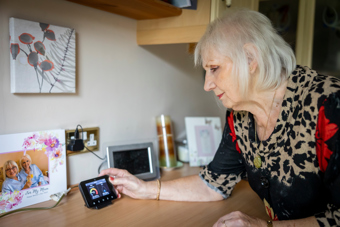 A scheme to reduce the impact of fuel poverty on vulnerable people has been linked to a near 10 per cent reduction in GP appointments, according to a report.
The project focused on adults with chronic obstructive pulmonary disease (COPD) in St Helens and Knowsley.
It features an innovative package of interventions, including medicines optimisation, pulmonary rehabilitation referrals, support for smoking cessation and help with finances.
The report, compiled by NHS Cheshire and Merseyside who worked in partnership with Health Innovation North West Coast, shows a 9.8 per cent reduction in GP appointments in the 12 months after the project was launched.
The analysis compared a group of 254 patients who had benefited from an intervention and a matched group of patients who had not had the intervention, and showed around 400 GP appointments had been avoided. This would reduce pressure on primary care and enable GPs to use this time to see other vulnerable patients.
The report, by Senior Data Scientist Nicolaos Koukkoulli of NHS Cheshire and Merseyside’s Population Health Team, shows that, were the project to be scaled up to 1,000 patients, it would have avoided around 1,575 GP appointments.
“This shows that if this intervention is scaled up to Cheshire and Merseyside, a significant financial relief (i.e. cost avoidance) could be achieved in primary care settings, while also helping patients who are living in fuel poverty,” the report concludes.
Professor Ian Ashworth, NHS Cheshire and Merseyside’s Director of Population Health, said: “This is a great example of how collaboration can deliver significant results.
“The partnership has brought together a wide range of specialists from various fields who have used their expertise to support some of the most vulnerable people in our communities.”
Rhiannon Clarke, Senior Programme Manager at Health Innovation North West Coast, said: “These results are fantastic, and they validate everything we’ve been doing. They show how well the scheme has not only supported people with COPD but also relieved some of the pressures on the healthcare system.
“We knew that an innovative scheme such as this could make the most of the knowledge and expertise we have in the region and make sure it was focused on the most vulnerable people.”
The project used the Combined Intelligence for Population Health Action (CIPHA) data system to develop a dashboard which could identify people who would benefit most from an intervention. This is in line with the ambitions of the Cheshire and Merseyside Data into Action programme that uses patient information to improve care.
While the scheme focused initially on adults with COPD, it has since widened its scope to support children at risk of developing breathing problems.
By last spring, nearly 700 people had been put on a pathway to improve their health as part of the scheme. Read more on the Health Innovation North West Coast website and explore the toolkit that was developed to support colleagues who want to roll out similar schemes in other areas.
The fuel poverty project was funded through NHS England’s Innovation for Healthcare Inequalities Programme (InHIP), which aims to address healthcare inequalities experienced by deprived and other under-served populations.
Anyone who would like more information about our fuel poverty mitigation work should contact Rhiannon Clarke.